Rolex waiting list vs grey market: what impatience really costs (2026)
Wait in a boutique or pay the grey-market premium: the price gap model by model in 2026, what a Rolex waiting list really is, the risks of the parallel market and the CPO option.
Model values · · 8 min read

For a steel Rolex sports watch, two paths lead to the wrist: wait in a boutique, at retail price, or buy straight away on the grey market, at a premium. The question is not a moral one, it is financial: how much does impatience cost, and against what risks? In 2026, the answer varies widely from one model to another.
What a Rolex waiting list really is
Rolex does not sell directly: its watches go through a network of authorised dealers, who receive limited allocations of the most sought-after models. The "waiting list" is therefore neither an official register nor a numbered queue. It is a list of interest kept by each boutique, which allocates the available watches according to its own criteria.
In practice, three elements weigh, according to the feedback we gather:
- Purchase history with the boutique, which remains the most decisive criterion, even if it is never stated.
- The relationship with the sales associate and regular visits, including for servicing watches already bought.
- Flexibility on configuration: accepting a less sought-after dial or bracelet often shortens the wait.
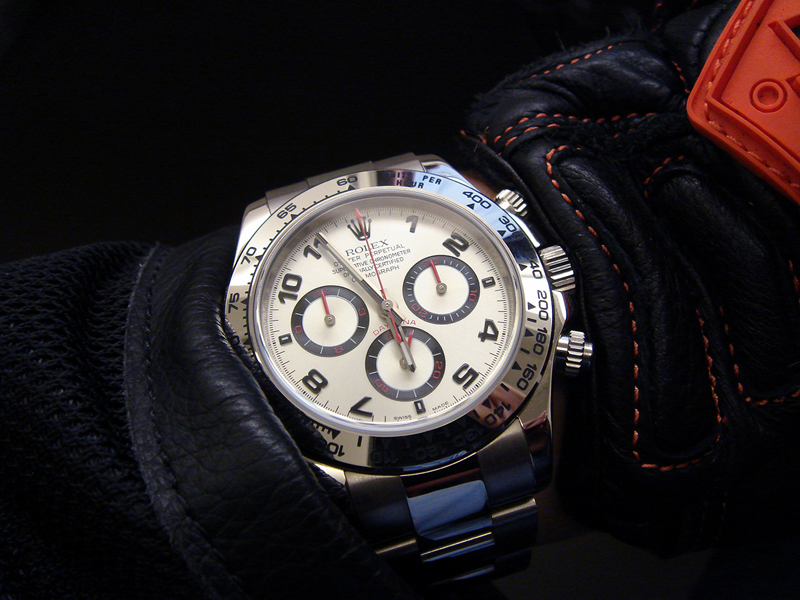
Waiting times are therefore impossible to guarantee. For a classic Datejust, the wait is counted in weeks, or none at all. For a steel Daytona, it can run to years, with no certainty of success.
What the grey market is
The grey market refers to the sale of new or nearly new watches outside the authorised network, by independent dealers. These watches are authentic and come from clients reselling their allocation, dealers abroad or very recent second-hand stock. Their price is set by supply and demand, with a premium over retail for rare models.
The grey market is not illegal, but it does not offer the guarantees of a boutique purchase: the Rolex international warranty runs from the date written on the card, and seller quality varies enormously from one dealer to another.
The price gap model by model in 2026
The table below compares the indicative retail price (French 2026 price list, rounded) and the range observed on the grey market for new or lightly worn watches, complete, according to our surveys of dealers in Europe.
| References | Period | Indicative retail price | Observed range 2026 |
|---|---|---|---|
| Daytona 126500LN (steel, white dial) | 2023 – | ~€16,000 | €25,000 – €30,000 |
| GMT-Master II 126710BLRO (Pepsi) | 2018 – | ~€11,800 | €16,500 – €20,500 |
| GMT-Master II 126720VTNR (Sprite) | 2022 – | ~€11,800 | €15,000 – €18,500 |
| Submariner 126610LV (green bezel) | 2020 – | ~€11,500 | €14,000 – €17,000 |
| Submariner 126610LN (black) | 2020 – | ~€11,000 | €11,500 – €13,500 |
| Submariner 124060 (no date) | 2020 – | ~€9,800 | €10,000 – €11,800 |
| Explorer 224270 (40 mm) | 2023 – | ~€8,000 | €7,800 – €9,300 |
| Datejust 41 126334 (fluted) | 2016 – | ~€11,300 | €9,800 – €12,800 |
Three groups clearly emerge:
- High-premium watches (Daytona, Pepsi, Sprite): impatience costs from €4,000 to over €10,000. Waiting makes sense if you are a regular client of a boutique.
- Moderate-premium watches (black and no-date Submariner, Explorer): the gap is counted in hundreds of euros, sometimes one or two thousand. The grey market becomes a rational option for anyone who does not want to wait.
- No-premium watches (Datejust, most gold models): the grey market and recent pre-owned are often cheaper than the boutique. Waiting has no financial benefit.
For each model, our pages detail the ranges by year: see for example the Submariner page and the valuation tool, or the dedicated articles on the Daytona and the GMT-Master II.
The real cost of waiting
The retail price is not always the price actually paid. To get an allocation, some clients first buy other watches or jewellery in the boutique, to build up a history. If those purchases do not interest you for their own sake, their resale depreciation must be added to the calculation. A Daytona "at retail" preceded by two watches resold at a loss can end up costing as much as on the grey market.
You also need to factor in annual price increases. Rolex generally raises its prices in January: waiting two years can mean paying 5 to 10% more than when you signed up, which reduces the saving compared with the grey market by the same amount.
The risks of the grey market
Buying outside the authorised network is not risky in itself, but the risk rests entirely on your vigilance:
- Authenticity. Fake Daytonas and GMTs are now very accomplished. Insist on authentication by an independent watchmaker before paying.
- Matching papers. The serial number engraved on the watch must match the one on the warranty card. A missing or illegible card is a warning sign, not a detail.
- The warranty. It started running on the date of first sale. A "new" watch with an eighteen-month-old card has already lost part of its coverage.
- The seller. Favour an established dealer, with a physical address, proper invoices and their own warranty of at least one year.
The third way: Certified Pre-Owned
Since 2022, Rolex has run its CPO "Certified Pre-Owned" programme, through which some authorised dealers sell pre-owned watches checked by the brand, with a two-year Rolex warranty. Prices are generally aligned with the top of the grey market, sometimes above. You pay for peace of mind: authenticity certified by the brand and after-sales service assured. For a watch over €15,000, the price gap can be justified by the reduction in risk alone.
And if you are selling?
The reasoning reverses for the seller. A watch obtained at retail and resold at a premium generates a gain, which raises two questions. First, the relationship with the boutique: quickly reselling an allocation can close the door to the next ones. Second, tax: in France, above €5,000 the sale falls under the 6.5% flat tax on the sale price, or, by option and with proof of purchase, under the capital gains regime, at 36.2% with a 5% allowance per year beyond the second. On a watch resold at a large premium shortly after purchase, the calculation is worth doing. If you live outside France, check the rules of your own country. Our guide to selling a luxury watch and our sell your watch page detail the steps.
In short
Waiting in a boutique only saves money on a handful of models: the Daytona, the coloured GMT-Master IIs, the green Submariner. For the others, the grey market or recent pre-owned offer a similar or even lower price, with no wait. In every case, buying outside a boutique requires rigorous checking of the papers and authenticity. Before choosing, compare the price offered with the market value: estimate the value of the watch you want from its reference and year, according to our price surveys.
The model's value: Rolex Submariner