Should you polish your watch? What polishing really does to its value
Polishing removes scratches, but it also removes metal and softens the original edges. Depending on the watch's age and type, the effect on value ranges from neutral to very damaging.
Maintenance · · 7 min read

A watch that gets worn gets scratched: it is inevitable, and actually rather a good sign. During a service, it is tempting to have it "restored to new". But polishing is not cleaning: it removes metal, and what is removed never comes back. Depending on the watch, the operation can have no effect on value, or cost it a significant share of its market value. Here is how to think it through.
What polishing actually does
A watch case generally combines several surface finishes: brushed faces (grained in a precise direction), mirror-polished faces, and bevels that separate the two with a sharp edge. This interplay of surfaces is what gives a reference its visual identity.
Polishing involves sanding and then buffing the metal to remove scratches. Done well, with careful re-brushing, it is almost invisible. Done badly or repeatedly, it produces tell-tale effects:
- rounded edges where they used to be sharp;
- thinned or vanished bevels;
- thinner, shorter lugs;
- brushed finishes replaced by polish, or re-brushed in the wrong direction;
- shallower engravings and hallmarks.
Each pass removes a thin layer of metal. After several services with systematic polishing, the case never regains its original proportions.
The impact on value, by type of watch
The effect of polishing on value depends above all on what the buyer is looking for. For a recent watch, they want a watch in good condition; for a vintage watch, they want an original watch. The table below summarises the gaps observed in 2026, with comparable mechanical condition and paperwork.
| Watch profile | Light, well-executed polish | Heavy or repeated polish |
|---|---|---|
| Recent watch (under 10 years) | Neutral to slightly positive | 5 to 10% less |
| Watch 10 to 30 years old, common reference | Neutral to 5% less | 10 to 20% less |
| Collector's watch, original case sought after | 10 to 20% less | 20 to 40% less, sometimes more |
| Gold or platinum case | Moderate effect, except on collector's pieces | 10 to 25% less |
The last row is easily explained: gold is softer than steel and scratches more easily, but it also polishes away faster, and each pass removes more metal.
Recent watches: a "refurbishment" service is often acceptable
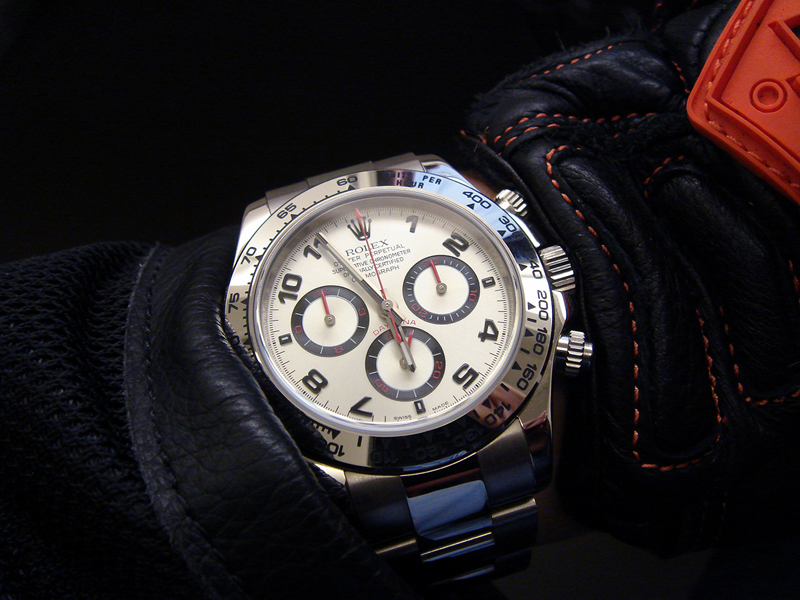
On a watch a few years old and still in production, a light polish carried out by the brand during a service generally does not hurt resale. The buyer of a recent Rolex Submariner wants a watch that looks new, and a uniformly scratched case can even slow down the sale.
Two caveats nonetheless. First, a recent watch case often has very crisp edges, which an informed buyer looks at first: a sloppy polish shows immediately. Second, superficial scratches on a recent watch are often considered normal; it is not always worth removing them.
Vintage watches: the original case makes the value
On a vintage watch, the logic is reversed. Collectors look for "unpolished" or "lightly polished" cases whose edges and bevels are intact. A vintage Rolex Explorer or Omega Speedmaster Moonwatch with thick lugs and crisp bevels trades well above an example with softened metal, even if the latter looks shinier.
Scratches, small marks and even wear are part of the watch's history, just like the patina of a dial. A vintage buyer generally prefers a scratched but intact case to a shiny but misshapen one. Scratches can be redone; removed steel does not come back.
How to spot a polished case
When buying, as before selling, a few simple checks let you assess a case's condition:
- Look at the edges in profile, under raking light: a sharp edge reflects a crisp line of light, a polished edge a diffuse glow.
- Compare the lug thickness with photos of original examples of the same reference.
- Examine the spring-bar holes: on some watches, drilled-through holes that look distorted or flared point to heavy polishing.
- Check the brushed finishes: their direction and regularity should match the originals.
- Look at the engravings on the caseback and lugs: a shallow engraving can betray repeated passes.
These checks are part of our pre-owned buying checklist.
Polish before selling?
It is a frequent question, and the answer is almost always no. An informed buyer would rather judge the original condition than discover a refurbished case without knowing how much metal has been removed. A trade-in professional, for their part, will decide for themselves whether to polish, and will add nothing to their offer for work already done. The most effective approach remains careful cleaning, honest photos and a complete set.
What to ask for at the service
Most brand service centres include case refurbishment by default. If you want to avoid it, say so in writing on the drop-off receipt, ideally with the words "no polishing, no re-brushing, case and bracelet to be returned as is". Several houses honour this request; some workshops offer an intermediate option, with a simple ultrasonic clean.
An independent watchmaker is often more flexible on this point, and can sometimes redo a brushed finish without touching the edges. Our article on the cost and frequency of servicing by brand compares the two options.
Alternatives to polishing
Between leaving a case as it is and a full polish, there are intermediate solutions, often better suited:
- Ultrasonic cleaning removes the dirt that builds up between the links and around the bezel, without touching the metal. A watch that is simply clean often looks much sharper than before.
- Localised re-brushing removes superficial scratches from a brushed face without rounding the neighbouring polished edges. It requires a careful watchmaker, but removes very little metal.
- Replacing wear parts, such as a damaged bezel or ceramic bezel insert, deals with the most visible defect without touching the rest of the case. Keep the original part, which still has value for a collector.
Finally, the cheapest option is often the right one: accept the signs of wear. A scratch on the clasp or on the top of the lugs is the normal result of wearing a watch, and most buyers factor it in without difficulty.
The bracelet
A metal bracelet follows the same logic, with one nuance: it wears mechanically, link against link, and a stretched bracelet shows as much as a polished case. An original Oyster bracelet, even scratched, keeps its value; a replacement bracelet, even new, is not worth the same to a vintage collector. Always keep the old bracelet if you have it replaced.
In short
On a recent watch, a light and well-executed polish is rarely damaging. On a vintage or collector's watch, it can cost 10 to 40% of the value, and it is irreversible. When in doubt, do not polish: a scratch can be judged, a misshapen case costs you.
Before deciding, estimate your watch's market value in its current condition: you will know what is at stake, and can weigh it against the cost of refurbishment.